
At HydroWorx, we are dedicated to pushing the boundaries of what aquatic therapy can achieve through innovative design and high-performance equipment. Hydrotherapy resistance training represents a sophisticated shift in fitness, utilizing the physical properties of water to build significant strength. By integrating this low-impact environment into routines, we help users achieve remarkable physical results safely. Our specialized hydrotherapy equipment is engineered to harness the natural power of water, providing a versatile platform for both rehabilitation and high-performance conditioning. Unlike traditional land-based exercises that often place excessive stress on the joints, water-based resistance training offers a supportive yet challenging medium that engages the entire body. We believe that by providing the right technology, we empower clinicians and athletes alike to explore the full potential of hydrotherapy. This approach allows for earlier intervention in recovery and creative strength protocols that cannot be replicated on land. Through our advanced solutions, we aim to redefine the standard of training.
The Science of Viscous Resistance
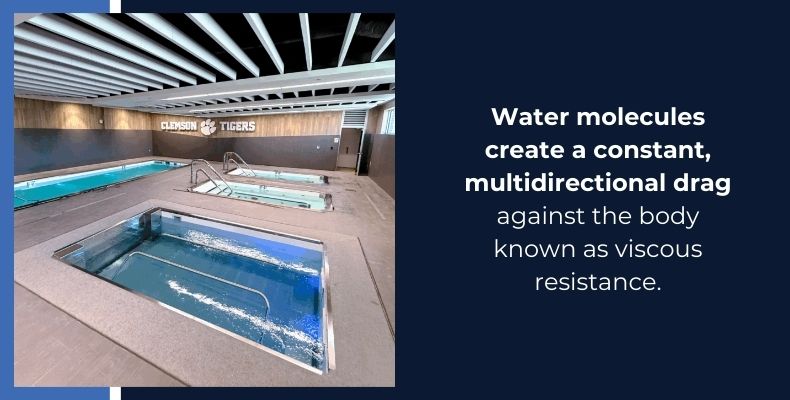
Water’s unique property of viscosity provides a natural form of resistance that is absent on land. On land, resistance is typically linear and governed by gravity, meaning the primary challenge occurs in a single direction. In contrast, water molecules create a constant, multidirectional drag against the body known as viscous resistance. This drag acts as a 360-degree weight machine, requiring every muscle group—including the small, deep-seated stabilizing muscles—to engage simultaneously just to maintain movement and posture.
Key factors that influence this resistance include:
- Surface Area: Increasing the surface area of a limb or tool significantly increases the drag.
- Velocity: The faster a movement is performed, the more turbulence is created, leading to exponentially greater resistance.
- Turbulence: Moving through disturbed water adds a secondary layer of challenge for the core and extremities.
Because this resistance is present throughout the entire range of motion, it ensures that both agonist and antagonist muscles are worked equally. This balanced approach to strengthening remains exceptionally gentle on the skeletal system, making it ideal for those who need to build power without the jarring impact associated with traditional heavy lifting.
Harnessing Isokinetic Force Delivery
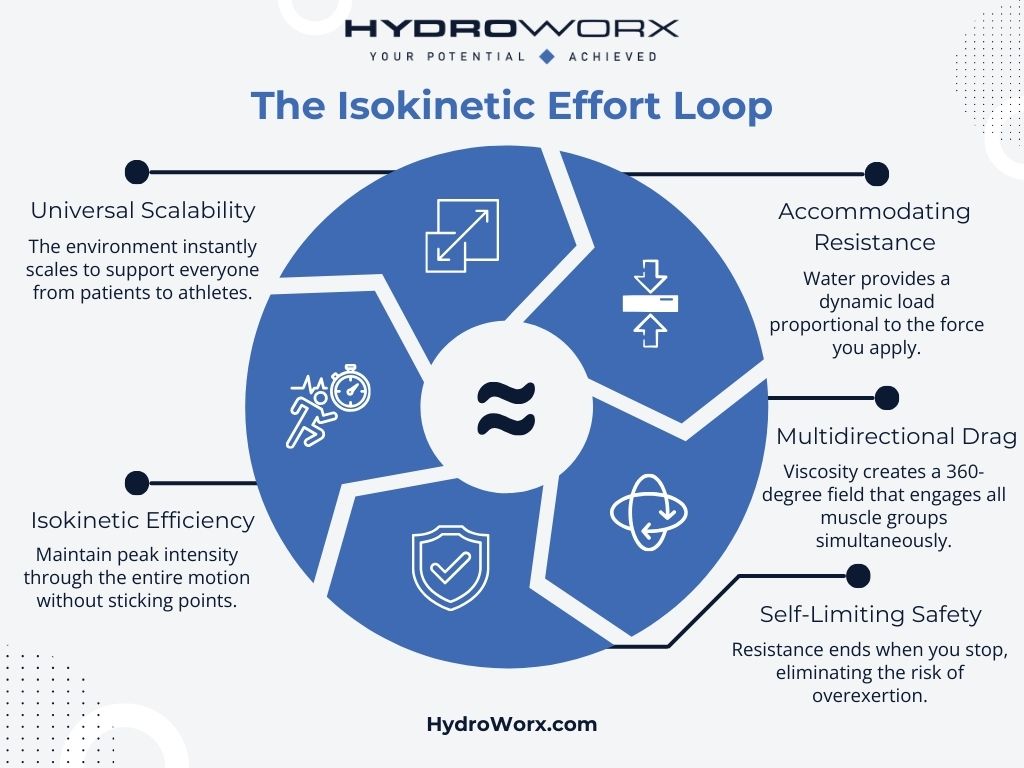
One of the most significant advantages of aquatic training is its inherently isokinetic nature. In a traditional gym setting, weight stacks or dumbbells provide a fixed load; if the weight is too heavy, the user risks injury, and if it is too light, the workout is inefficient. Water resistance, however, is perfectly proportional to the effort exerted. This is known as accommodating resistance—the medium only pushes back as hard as the user pushes against it.
This self-limiting feature provides several critical benefits:
- Safety: It is virtually impossible to overstrain a muscle because the resistance disappears the moment the user slows down or stops.
- Efficiency: Users can work at their maximum capacity through every degree of a joint’s movement, rather than just at the sticking point of a traditional lift.
- Customization: A single session can accommodate a wide range of ability levels, as the water adapts instantly to the individual’s strength and speed.
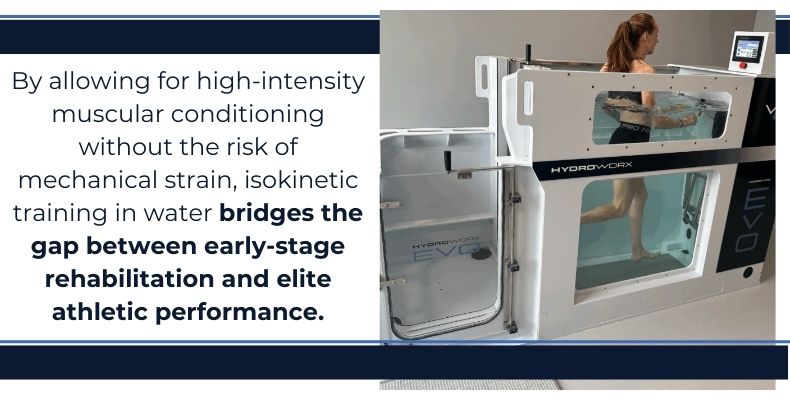
By allowing for high-intensity muscular conditioning without the risk of mechanical strain, isokinetic training in water bridges the gap between early-stage rehabilitation and elite athletic performance. It provides a safe environment to explore maximum power output without the fear of failure common with heavy iron weights.
Sensory Feedback and Neuromuscular Control
Training in water offers unique sensory feedback that enhances proprioception—the brain’s ability to sense the body’s position in space. The surrounding hydrostatic pressure provides constant tactile input across the entire surface of the skin. This enveloping sensation helps the nervous system refine its understanding of limb placement and movement patterns. This heightened awareness is crucial for developing functional strength and balance, as the brain must constantly process these signals to maintain stability in a fluid environment.
The buoyancy of water also alters the traditional relationship between the body and gravity. This change forces the vestibular system and core stabilizers to work harder to maintain a vertical or specific athletic position.
- Improved Balance: The slower pace of movement in water gives the brain more time to correct postural shifts.
- Refined Motor Skills: The constant pressure helps re-map movement patterns that may have been altered by injury or long-term inactivity.
- Neuromuscular Efficiency: Coordination improves as the body learns to manage the resistance of the water from all angles.
These benefits make aquatic training a powerful tool for those looking to refine their athletic performance or recover lost motor control, ensuring that the strength built is not just vanity muscle but functional, controlled power.
Metabolic Efficiency and Thermal Regulation
Beyond mechanical resistance, the aquatic environment influences metabolic demands through thermal conductivity. Water conducts heat approximately 25 times faster than air, which allows the body to dissipate heat much more efficiently during exercise. On land, a rising core temperature can lead to early fatigue and cardiovascular strain, limiting the total volume of work a person can perform. In a temperature-controlled aquatic setting, the body stays cooler, allowing for higher work capacity and longer duration sessions.
This regulated environment supports several metabolic advantages:
- Increased Caloric Burn: The body often works harder to maintain its core temperature while simultaneously fighting viscous resistance.
- Enhanced Cardiovascular Health: The hydrostatic pressure aids in venous return, helping the heart pump blood more efficiently back from the extremities.
- Reduced Recovery Time: The cooling effect of the water can minimize post-exercise inflammation and muscle soreness.
Working in water ensures that the primary focus remains on consistent, high-quality muscular engagement and development. Because the cardiovascular system is not struggling to keep the body cool, more oxygen and nutrients can be diverted to the working muscles. This leads to a more efficient workout where users can push their limits further than they might in a hot, humid land-based gym, resulting in superior strength gains and metabolic conditioning.

By leveraging the unique physical properties of water, we can redefine the standards of physical conditioning and rehabilitation. These pillars of aquatic science demonstrate that building strength does not require the heavy impact of traditional land-based methods. HydroWorx remains committed to providing the professional-grade tools required to execute these strategies. Whether you are looking to accelerate recovery times or provide a high-performance training environment for elite athletes, our technology offers a versatile solution. Contact us today for a consultation or browse our latest equipment line to see how we can transform your facility and help your clients achieve their strength goals.