
Managing Postural Orthostatic Tachycardia Syndrome (POTS) presents unique, exhausting daily challenges, particularly because standard gravity-bound exercises often trigger severe dizziness, profound fatigue, and rapid heart rate spikes. For individuals living with this form of dysautonomia, the simple act of standing upright can feel like an uphill battle against their own autonomic nervous system. Finding a safe, predictable environment to build physical tolerance and cardiac capacity without triggering debilitating crashes is an essential pillar of long-term recovery.
At HydroWorx, we believe that leveraging the therapeutic, science-backed properties of water offers a transformative pathway toward symptom relief and sustainable wellness. By stepping into an aquatic environment, patients essentially escape the harsh, immediate demands of gravity, allowing them to exercise in a supportive state of simulated microgravity. This approach shifts the rehabilitation focus from fighting orthostatic intolerance to safely rebuilding the body’s natural strength and endurance.
Counteracting Orthostatic Intolerance Through Water Buoyancy
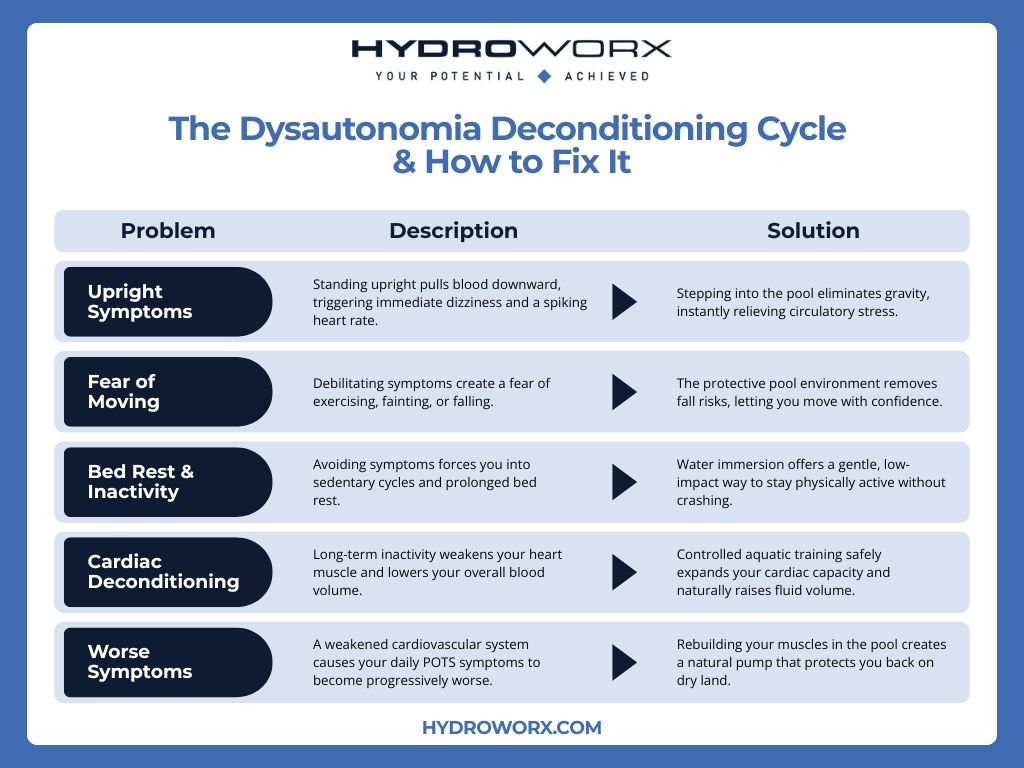
When individuals with POTS stand up on land, gravity immediately pulls blood downward, causing fluid to pool in the abdomen and lower extremities. This pooling triggers a compensatory, rapid elevation in heart rate as the body scrambles to keep blood flowing to the brain. Utilizing aquatic therapy for POTS fundamentally shifts this dynamic by unweighting the body and neutralizing gravitational forces.
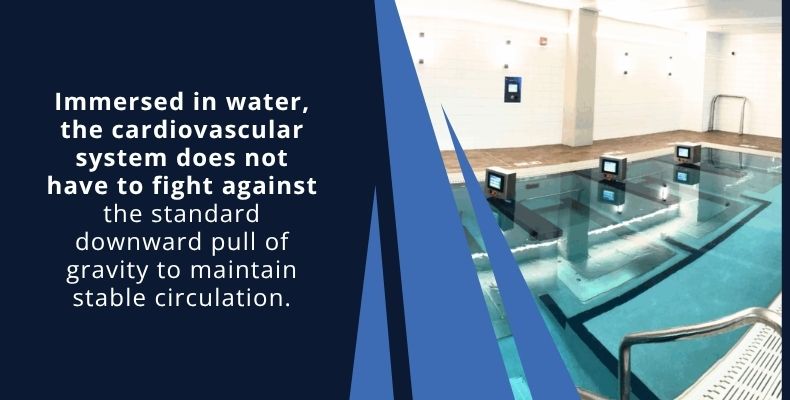
Water’s natural buoyancy reduces the apparent weight of the patient, which minimizes the physiological stress typically caused by standing upright on land. Immersed in water, the cardiovascular system does not have to fight against the standard downward pull of gravity to maintain stable circulation.
- Reduced Gravitational Stress: Eliminating the heavy burden of gravity prevents the sudden drops in blood pressure that cause lightheadedness.
- Minimized Fluid Pooling: Unweighting the body helps maintain an even distribution of blood flow throughout the torso and head.
- Enhanced Exercise Safety: Patients can perform upright movements, like walking or stepping, that would otherwise be completely impossible or dangerous on land.
This supportive buoyancy creates a comfortable, low-risk environment where individuals can safely initiate movement, building physical confidence without the immediate fear of syncope or severe pre-syncope episodes.
Harnessing Hydrostatic Pressure for Deep Circulatory Support
The natural, uniform pressure exerted by water acts like a continuous, full-body compression sleeve for patients during their rehabilitation sessions. This powerful force, known as hydrostatic pressure, increases automatically with water depth, meaning the deepest pressure is exerted exactly where POTS patients need it most—on their lower legs, ankles, and feet.
This mechanical pressure actively pushes pooled blood from the lower limbs back upward toward the chest cavity and heart, significantly improving venous return and stroke volume. Because the heart receives a steady, adequate supply of blood with each beat, it no longer needs to beat frantically to sustain proper cerebral perfusion.
- Natural Vascular Compression: Mimics the effects of high-grade compression garments but applies the pressure uniformly across the entire submerged body.
- Stabilized Heart Rates: Improved venous return naturally lowers the resting and working heart rate during exercise.
- Alleviation of Lightheadedness: Consistently moving blood upward drastically reduces the frequency and severity of dizzy spells.
By utilizing this built-in circulatory aid, clinicians can guide patients through highly effective rehabilitation sessions that optimize cardiovascular efficiency while keeping autonomic symptoms securely under control.
Conditioning the Cardiovascular System Safely and Progressively
Building upright cardiovascular endurance is notoriously difficult when facing chronic orthostatic challenges on land, as standard upright aerobic exercise often induces immediate symptom flares. In a specialized aquatic environment, however, individuals can safely engage in low-impact cardiovascular training without the pervasive fear of fainting, losing balance, or falling.
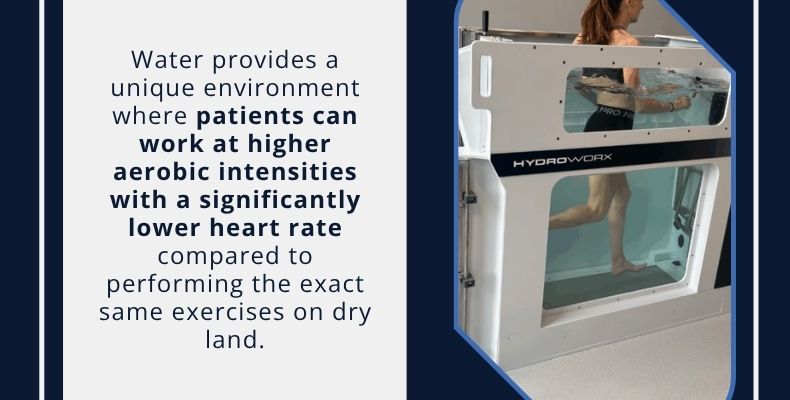
Water provides a unique environment where patients can work at higher aerobic intensities with a significantly lower heart rate compared to performing the exact same exercises on dry land. This supportive medium allows patients to recondition their hearts, expand their stroke volume, and increase overall blood volume gently over time.
- Lower Working Heart Rates: Patients can achieve necessary cardiovascular training zones without pushing their heart rates into dangerous, symptomatic thresholds.
- Aerobic Capacity Expansion: Sustained, gentle movement helps reverse the cardiac deconditioning that frequently accompanies prolonged bed rest or inactivity.
- Reduced Post-Exercise Crashes: The protective aquatic environment helps prevent the autonomic overstimulation that typically leads to severe post-exertional malaise.
Gradually expanding cardiac capacity in the water paves the way for increased daily stamina, making transitions back to necessary land-based activities much more manageable.
Rebuilding Muscular Strength and Vascular Support Without Gravity Strain
Musculoskeletal conditioning is vital for long-term symptom management, yet traditional weight training and resistance exercises can easily overwhelm a highly sensitive autonomic nervous system. Water provides smooth, continuous, fluid resistance that challenges muscles safely and evenly in every direction of movement, eliminating the jerky motions associated with free weights.
Patients can effectively rebuild core and lower body strength—particularly in the calves and thighs—which provides better natural vascular support when they eventually return to exercising on dry land. Stronger leg muscles act as a more efficient skeletal pump, squeezing the veins naturally to assist with circulation during everyday standing and walking.
- Fluid Resistance Training: Water resists movement in direct proportion to the effort applied, allowing patients to control their workout intensity perfectly.
- Targeted Lower Body Strengthening: Focusing on the muscles in the calves helps mitigate future blood pooling on land.
- Gentle Core Stabilization: Engaging the core muscles in a low-impact environment improves overall posture and autonomic stability.
This progressive strengthening process allows individuals to develop the essential muscular framework required to support their circulatory system, building lasting resilience against orthostatic intolerance.

Navigating the complex daily disruptions of orthostatic intolerance requires an innovative, gentle approach to physical reconditioning that traditional land-based setups simply cannot provide. By minimizing the harsh effects of gravity, aquatic therapy for POTS offers clinical teams a predictable, highly supportive environment to safely control patient heart rates, enhance circulation, and accelerate physical independence. At HydroWorx, we design state-of-the-art hydrotherapy solutions that empower clinicians to overcome standard exercise barriers, expand their treatment capabilities, and achieve faster, more comfortable outcomes for neurologically sensitive patient populations. If you are ready to elevate your rehabilitation strategy and add a powerful tool to your facility’s offerings, we invite you to explore our advanced pool technology or contact our team today to request a product demonstration.