
As individuals age, the discs in their spinal column become more likely to tear and cause pain. If a patient hurts their back and is experiencing sharp nerve pain, the cause could be a slipped disc. Thankfully, the pain can be reduced with physical therapy and enough time.
The spinal column is a complicated system of bones, cushioning discs, nerves and muscles. Sometimes, back pain results from muscle or bone dysfunction. However, an issue with any part of an individual’s back can eventually affect their nerves, and this is typically what causes the most pain. Hydrotherapy can make a significant difference in reducing your patients’ back pain.
What Is a Herniated Disc?
Spinal discs are located between each vertebra in the back, providing a cushion between bones. Discs have two parts — the soft, jelly-like nucleus in the center and a tough, rubbery exterior. Over time, or because of an accident, this exterior can stretch or tear. A herniated or slipped disc is when the nucleus pushes out partway through a tear in the disc’s exterior.
Because there’s not much room in the spinal column, this issue can cause nerve suppression and sharp pain. However, not every slipped disc affects a nerve — in some cases, people with slipped discs may not even realize what’s happened. The two areas where most people experience slipped discs are in their neck or lower back.
Symptoms of a herniated disc may include the following:
- Nerve pain in the back
- Numbness or tingling in an arm or leg
- Muscle weakness in an arm or leg
- Trouble with incontinence
Because back pain affects so much of an individual’s life, a slipped disc can be scary. Thankfully, there are a wide range of treatments clinicians can offer to patients to reduce pain and help them enjoy movement again.
Hydrotherapy for Herniated Discs
Here are just a few approaches a physical therapist may take to reduce inflammation and help a patient’s body heal:
- Massages
- Stretching
- Ice and heat therapy
- Pelvic traction
- Low-impact movement
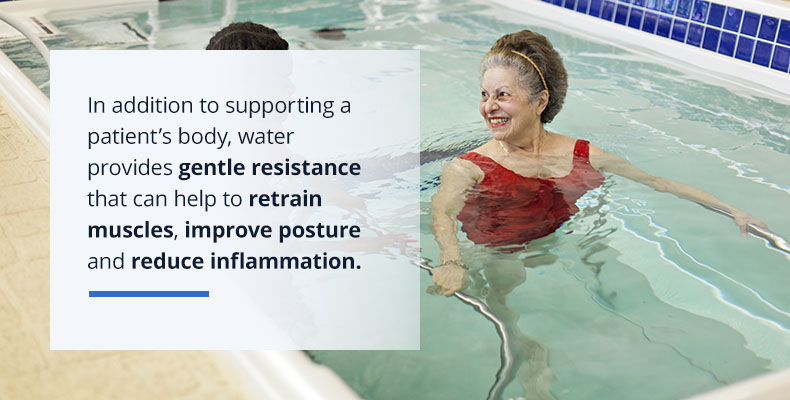
Hydrotherapy is another incredible option for treatment because it provides a safe environment for therapy exercises. In addition to supporting a patient’s body, water provides gentle resistance that can help to retrain muscles, improve posture and reduce inflammation.
Herniated Disc Case Study
For David, his herniated disc was disrupting his daily activities and his construction job. He was standing with his weight shifted to compensate for the pain, having sleeping problems and experiencing tight hip flexors. It came to the point where his doctors recommended surgery to give him some relief. Instead, he decided to try conservative treatment and went to see Veronica Paquette, PT, Owner of Essex Aquatic & Rehab Center in Essex Junction, VT.
To decompress his lumbar spine, Veronica put him into the HydroWorx 500 Series pool so he could work on core and leg strength without the pressure on his back. Other advantages of putting him in the pool included loosening his tight muscles with the warmth of the water and providing natural resistance to movements he would do on land for further strengthening.
They focused on exercises that would strengthen his core, increase his flexibility and strengthen his leg muscles. These protocols included:
- Walking on the underwater treadmill at 1.4 mph with progression up to 3 mph
- Side-stepping on the underwater treadmill
- Backwards walking on the underwater treadmill
- Hamstring stretching using the raised platform and handrails
- Step-ups
- Dumbbell flys using HydroTone dumbbells
- Push/Pull exercises
- Push Up/Down exercises to simulate lifting
- Abdominal rotations using noodles
- Bicycling using noodles
This list includes just a few of the protocols used during his sessions to improve his symptoms. David saw improvements by his second visit to the pool and ultimately avoided having surgery thanks to his work in the pool combined with a postural restoration program. By the end of his rehabilitation, he had increased his overall strength and reported feeling 90% better! He also eliminated his leg symptoms and back pain and increased his flexibility.
Veronica is confident in using aquatic therapy because it allows people to move without compensating. Once individuals are in the warm water, they are relaxed enough to do a range of motion exercises they may not be able to achieve on land. This ability allows patients to break the pain cycle and find relief!
Watch videos of his rehabilitation below:
To learn more about changing gait patterns for patients, view our webinar “The Use of Hydrotherapy for Gait Re-Education” on demand!