
When a puppy receives a diagnosis of juvenile hip dysplasia, the news can be heartbreaking for owners and challenging for veterinary professionals. Finding the delicate balance between necessary physical exercise and vital joint protection often feels like an impossible task. Traditional land-based activities, such as running or playing fetch, place excessive concussive stress on developing, unstable hip joints, leading to immediate pain, inflammation, and accelerated wear. However, the early months of a puppy’s life represent a critical window of opportunity. Proactive, targeted care implemented during this rapid growth phase can completely alter their physical trajectory before skeletal maturity. By addressing joint laxity early, veterinarians and pet owners can minimize long-term damage, manage discomfort, and set the foundation for a lifetime of comfortable mobility, ensuring these young companions can enjoy the active, vibrant lives they truly deserve. Keep reading to learn more about hydrotherapy for canines as a treatment for juvenile hip dysplasia from HydroWorx.
Understanding the Mechanics of Juvenile Hip Dysplasia
Juvenile hip dysplasia is a developmental condition characterized by abnormal joint laxity, meaning the head of the femur does not fit snugly into the acetabulum of the pelvis. In a rapidly growing puppy, this structural looseness causes the bones to rub and grind against one another, triggering painful friction, stretched ligaments, and immediate joint inflammation. Left unmanaged, this persistent instability forces the puppy to alter their gait mechanics, shifting weight away from the hindquarters. This compensatory shift leads to muscle atrophy in the rear legs and overburdens the front limbs.
Over time, the constant micro-trauma within the lax joint accelerates the onset of degenerative joint disease and osteoarthritis, sometimes before the dog even reaches two years of age. Recognizing these structural vulnerabilities early is paramount. By intervening strategically during the juvenile stage, veterinarians can manage the clinical signs of dysplasia while the puppy’s skeletal system is still highly adaptable, protecting the joint capsule from irreversible damage, ultimately preventing severe secondary structural deformities from taking hold.
The Therapeutic Benefits of Canine Hydrotherapy
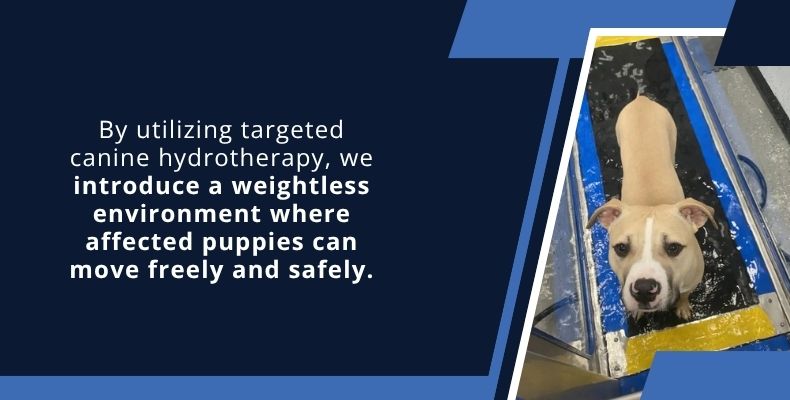
By utilizing targeted canine hydrotherapy, a weightless environment is introduced where affected puppies can move freely and safely. The natural buoyancy of water unloads a significant portion of the patient’s body weight, immediately reducing the gravity-induced stress and concussive forces on unstable hip joints. This weight relief provides instant comfort, allowing puppies to exercise without the pain associated with dry-land movement.
Furthermore, hydrotherapy utilizes the unique physical properties of water to maximize rehabilitation outcomes:
-
Hydrostatic Pressure: The uniform pressure exerted by water reduces limb swelling, decreases pain perception, and provides constant sensory feedback, which improves spatial awareness and coordination.
-
Thermal Benefits: Utilizing warm water increases circulation to compromised tissues, relaxes tight muscles, and improves overall joint flexibility.
This combination allows for fluid, controlled, and comfortable movement that is simply impossible to replicate safely on dry land, making it an ideal modality for fragile, growing joints, offering a profound sense of relief to the puppy.
Building Critical Muscle Support and Joint Stability
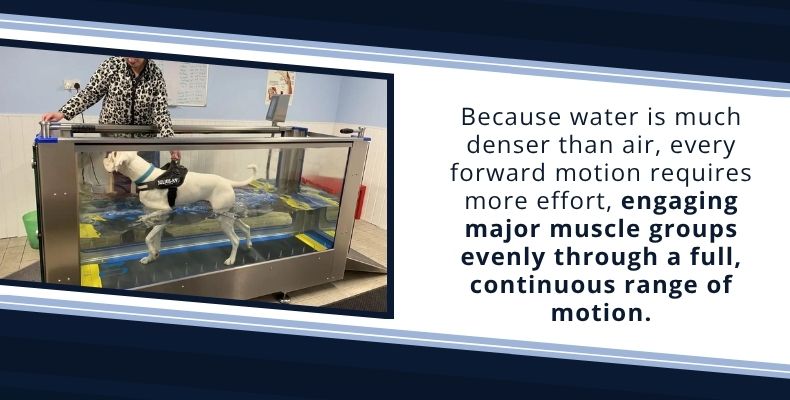
Rehabilitating young, dysplastic hips requires building significant hindquarter muscle symmetry and strength to actively compensate for the underlying structural laxity. Canine aquatic exercise provides natural, omnidirectional resistance that is vastly different from land-based movement. Because water is much denser than air, every forward motion requires more effort, engaging major muscle groups evenly through a full, continuous range of motion.
This resistance training focuses heavily on the gluteal and hamstring muscle groups, which are vital for pushing the femoral head into a more secure position within the hip socket. As these supporting muscles strengthen, they act as a natural brace, stabilizing the loose joint capsule and restricting the abnormal shearing forces that cause pain. By building this essential muscular scaffolding early in life, veterinarians are effectively minimizing future skeletal wear and tear, slowing the progression of osteoarthritis, and helping the puppy maintain a much more functional, symmetrical, and anatomically correct gait, which drastically reduces long-term operational wear.
Customizing Early Intervention Aquatic Protocols
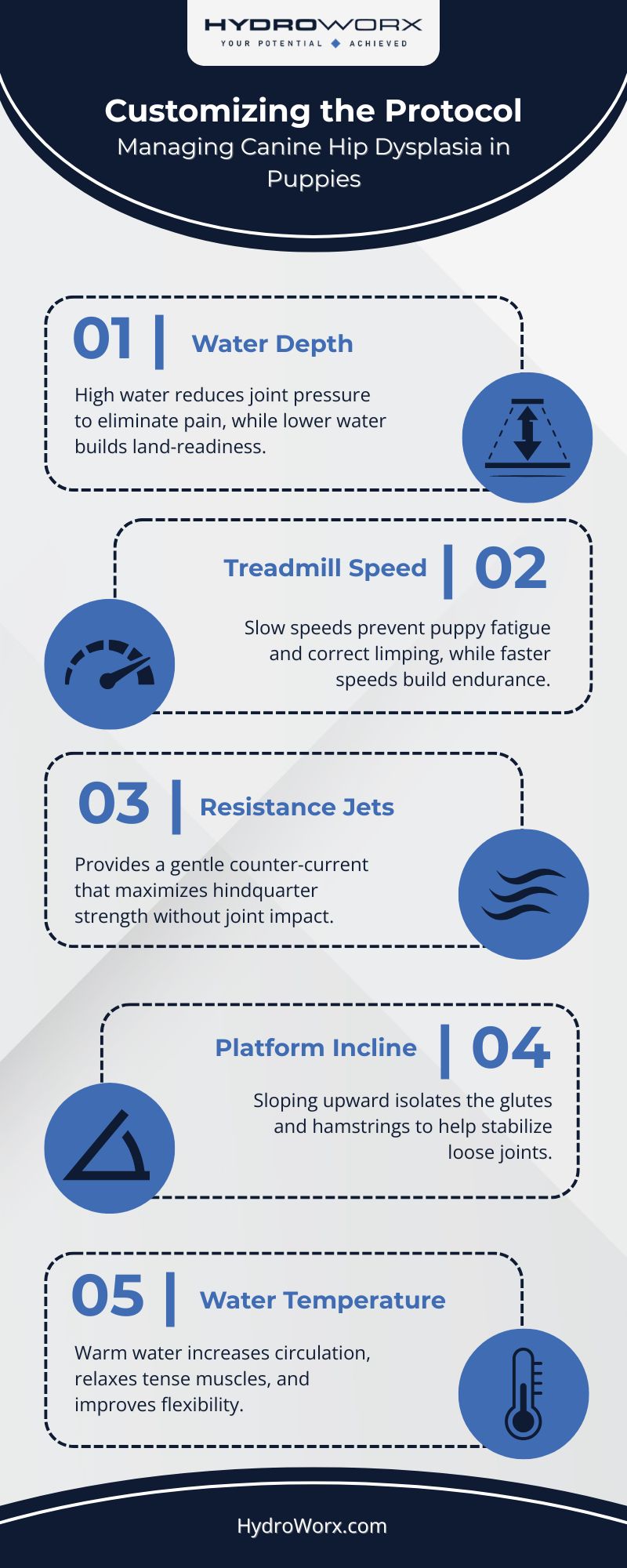
Every growing puppy presents a unique clinical picture, requiring a highly personalized approach that matches their specific breed size, stamina, and degree of joint laxity. Aquatic therapy is not a one-size-fits-all solution; instead, it relies on precise adjustments to variables like water depth, treadmill speed, and incline angles to achieve targeted therapeutic outcomes. For instance, altering the water level changes the amount of buoyancy and resistance, allowing therapists to precisely control weight-bearing metrics.
Early sessions typically focus on short, low-speed intervals to introduce the puppy to the movement without causing fatigue or micro-tears in developing tissues. As the patient’s strength and stamina improve, resistance can be gradually increased to continue building muscle safely. This highly customized approach keeps the workouts incredibly effective yet completely low-impact. By carefully managing the intensity, physical exhaustion can be avoided while maximizing the puppy’s musculoskeletal development during their most critical formative months, giving them a definitive structural advantage.

Successfully managing juvenile hip dysplasia requires immediate, decisive action during a puppy’s most critical growth phases. Implementing early intervention aquatic protocols is the absolute best way to protect vulnerable joints, reverse compensatory movement patterns, and build the structural symmetry needed to ensure a happy, active future for growing companions. At HydroWorx, we design cutting-edge, advanced aquatic therapy solutions that empower veterinary professionals to deliver precise, low-impact conditioning when it matters most. Our innovative HydroWorx K900 underwater treadmill allows veterinary clinics to fully customize water depth, treadmill speed, and resistance, safely stabilizing developing joints while building critical hindquarter muscle mass. To discover how our specialized, industry-leading equipment can elevate your practice’s rehabilitation offerings and improve long-term canine patient outcomes, contact our dedicated team today for a custom consultation.