
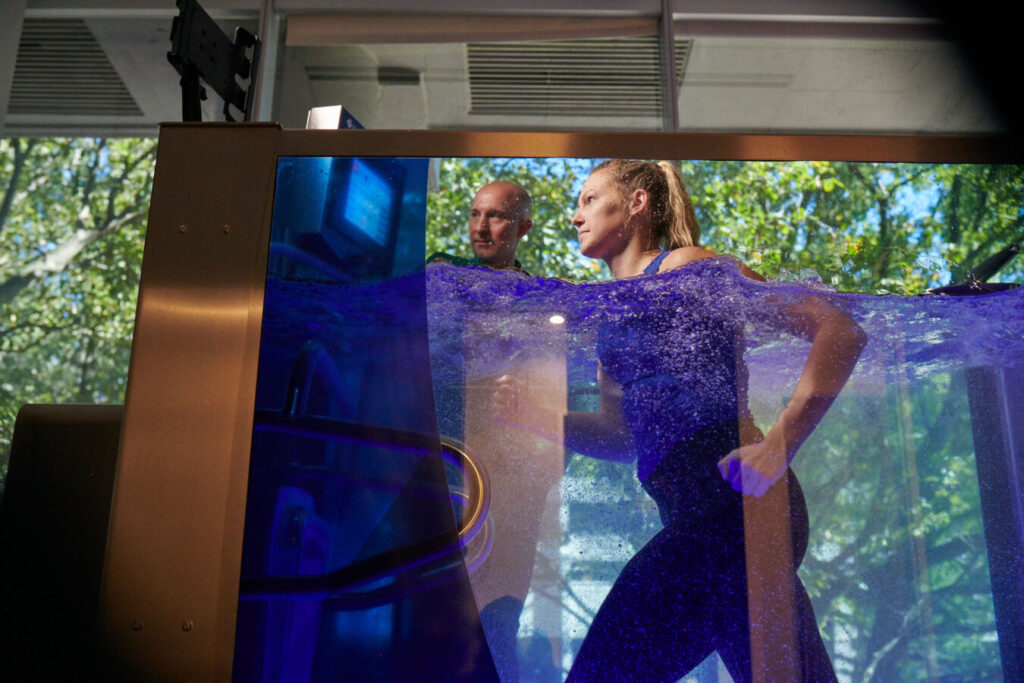
Coping with knee pain or knee injuries can be both physically and emotionally exhausting. You may be thinking that “The pain will never go away” or “Rehab is going to hurt” or “I will never run again.” Well, both of those thoughts and the pain can be significantly diminished with warm water therapy.

What Is a Total Knee Replacement?
A total knee replacement is a surgical procedure a patient undergoes when their knee joint is damaged or diseased. The procedure involves replacing the affected knee joint with an artificial joint. Total knee replacement can significantly improve daily function and movement as well as reduce pain. Physical therapy is important for getting the best results during recovery.
Benefits Of Using Aquatic Therapy For Rehabilitation
The water is a great environment for patients rehabbing knee injuries, or any type of injury/surgery, because “any exercise you can do on land you can do in the pool with the added resistance or assistance of the water.”- PT at Kansas Joint and Spine Institute.
Additionally, the water is a great place to work on balance and strengthening the accessory muscles too. If the patient is using dumbbells, hydrotones or the balance rings at the same time someone else is in the pool, then they have to work twice as hard on their balance. Combining a strengthening exercise with an additional person in the pool creates waves and an “unstable environment.” Creating this unstable environment in the pool allows patients to strengthen additional muscles, making the transition to walking on land and uneven surfaces a lot easier.
The warm water used in aquatic therapy also improves blood flow, which soothes sore muscles and alleviates pain. The reduced pain encourages patients to stretch and strengthen the knee joint. The water also creates an increased buoyancy that removes some of the pressure and stress on the knee joint.
Case Studies About Aquatic Therapy Rehabilitation for Total Knee Replacement
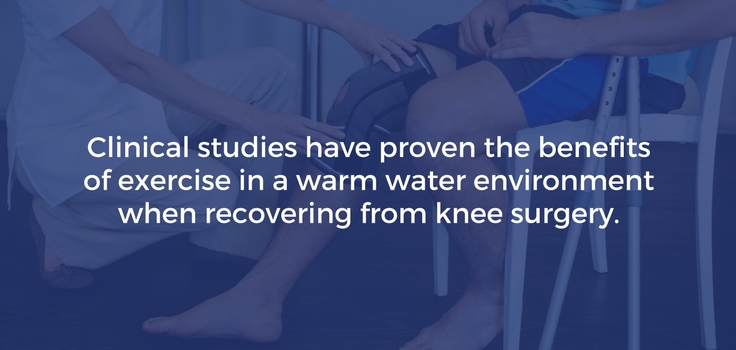
Clinical studies have proven the benefits of exercise in a warm water environment when recovering from knee surgery. A study by Drs. Mary Sanders and Daryl Lawson concluded that “an aquatic environment may be ideal during all phases of ACL rehabilitation post surgery.” Particularly following an intensive procedure, the added buoyancy of an aquatic environment relieves pressure on sensitive joints as they recover, allowing patients to slowly rebuild their strength through directed exercises.
During recovery from procedures typically performed on patients with osteoarthritis and other chronic conditions, such as a total knee replacement, the positive effects are even more pronounced.
Take the example of a Total Knee Replacement performed at the Kansas Joint and Spine Institute in Wichita, KS (from our video library). The patient received the surgery as a result of an injury that occurred 29 years prior! Fragments were beginning to break off of her knee cap and were “floating around,” which resulted in the need for this major surgery. The patient had the knee surgery and 4 days later she was in the pool.
“It was very pain free, I guess because gravity was not pulling my knee. And I loved it! But when you get out you can feel the workout. But I really was impressed!”- Knee Replacement Patient
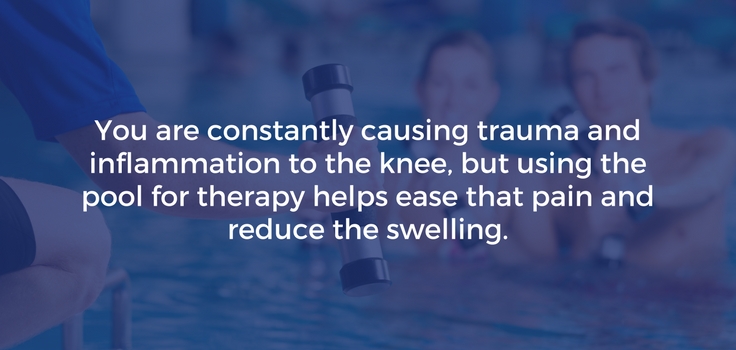
The physical therapist, described in the case history that total knee rehab is a painful process because in order to move forward at all with the rehab process, you must work to move the joint. Therefore, you are constantly causing trauma and inflammation to the knee, but using the pool for therapy helps ease that pain and reduce the swelling.
Speaking from much experience, the PT states that most patients who are discharged from the hospital from a knee surgery will be instructed to use aquatic therapy at the Kansas Joint and Spine Institute. She emphasizes the importance of starting off slow with controlled movements and then increasing the quantity and speed of the exercises as the joint warms up in the pool.
Aquatic Therapy Exercises for Knee Replacement
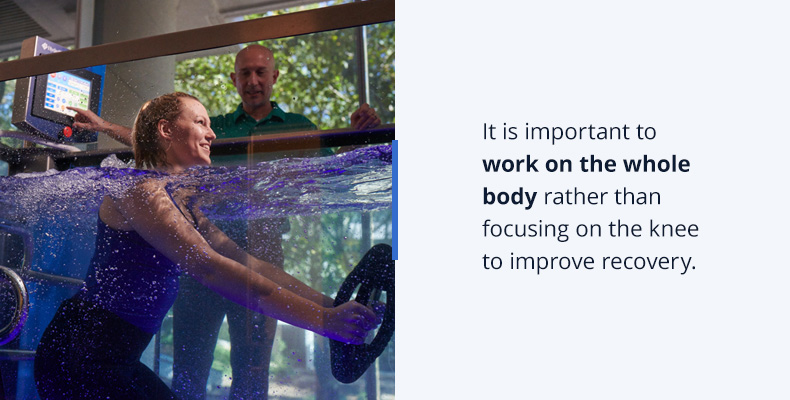
For this particular rehab, individuals can perform many different exercises. It is important to work on the whole body rather than focusing on the knee to improve recovery. To strengthen the whole body, a clinician can focus on stretching, strengthening, jogging and walking exercises.
One possible exercise is underwater bicycling, which involves kicking in a cycling motion. This is a particularly great way to stretch and improve range of motion. The patient can also do core stabilization exercises like sitting in a pike position and ensuring that their toes stick out of the water while making small circles with their hands to hold their body’s position. With an underwater treadmill, the patient can do walking and jogging exercises.
In our video, for example, the patient begins in the aquatic therapy pool, slowly warming up the joint with gentle squats, then hamstring stretches and lunges. Next, the PT has the patient put fins around her ankle (as you can see in the video) and perform knee extensions. The faster you kick in the water, the more resistance you will feel. Lastly, the patient finishes on the treadmill walking at a slow pace to get the joint used to the “walking motion.”
Numerous other exercises can be performed for knee rehabilitation. Watch the full video case study in our video library and see how the water can help ease knee pain for total knee patients!
To find out how aquatic therapy can impact rehabilitation, download our tip sheet, “5 Ways Aquatic Therapy Impacts Rehabilitation” here>>
Can Patients Run Underwater After Knee Replacement?
Since hydrotherapy after knee replacement surgery is recommended for successful recovery, patients can start running underwater after the procedure. Using equipment like the HydroWorx the underwater treadmill, individuals can start running without putting heavy stress on the knee joint.
ADDITIONAL RESOURCES ABOUT AQUATIC THERAPY AND REHABILITATION
- Aquatic Therapy for Knee Rehab
- Aquatic Therapy & Injury Rehab Time
- Orthopedic Surgery & Aquatic Therapy
- Sports Medicine & Aquatic Therapy
Contact HydroWorx for More Information
Aquatic therapy can be highly beneficial to recovery after a total knee replacement. Contact us to get in touch with our team and learn more.