
Underwater treadmill therapy provides remarkable physiological benefits for canine patients, ranging from post-operative orthopedic recovery to chronic osteoarthritis management. However, for an anxious or fearful dog, entering a novel equipment environment with moving parts, water immersion, and unfamiliar sounds can trigger a significant stress response. Fear, anxiety, and stress not only compromise a dog’s emotional well-being but also trigger muscle guarding, elevated cortisol levels, and abnormal movement mechanics—defeating the primary goals of rehabilitation. To ensure safe, effective, and fear-free treatments, veterinary rehabilitation professionals utilize structured water acclimatization and systematic desensitization protocols. Utilizing advanced canine aquatic systems like the HydroWorx K900, clinicians can precisely control environmental variables to help nervous dogs build confidence, relax their musculature, and embrace underwater treadmill therapy.
The Neurobiology of Fear and Muscle Guarding in Canine Rehab
When a canine patient experiences fear or anxiety during a rehabilitation session, its sympathetic nervous system activates the fight, flight, or freeze response. This physiological cascade releases adrenaline and cortisol, resulting in increased heart rate, shallow breathing, and widespread hypertonicity—commonly known as muscle guarding.
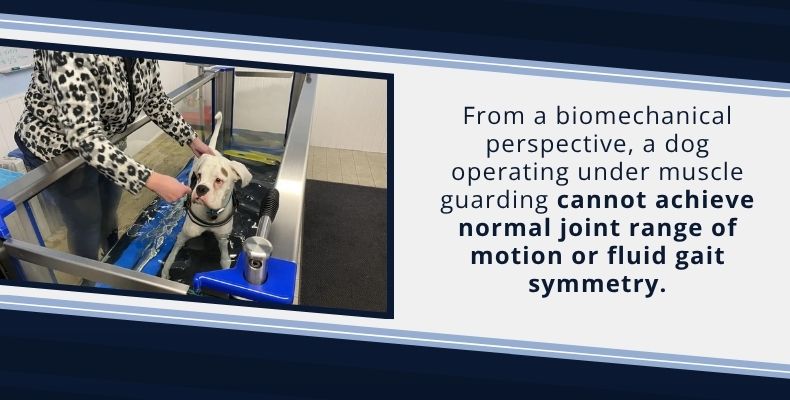
From a biomechanical perspective, a dog operating under muscle guarding cannot achieve normal joint range of motion or fluid gait symmetry. Instead of smoothly extending its limbs and relaxing into the buoyancy of the water, an anxious dog will often hold its body rigid, arch its spine, or panic against the glass walls.
- Disruption of Targeted Biomechanics: Tensed muscles counteract the natural buoyancy and resistance of water, placing unnatural stress on compensating joints and tendons.
- Elevated Cortisol and Delayed Healing: Chronic elevated stress responses interfere with tissue repair, immune function, and neuroplastic learning required for gait retraining.
- Risk of Negative Behavioral Association: Forcing an anxious dog into water without proper acclimatization creates a strong aversion, making future physical therapy sessions increasingly difficult.
- Inaccurate Diagnostic and Progress Metrics: Pain and strain assessments become unreliable when a dog’s gait alterations stem from fear-induced rigidity rather than anatomical dysfunction.
Step-by-Step Systematic Desensitization Protocols in the HydroWorx K900
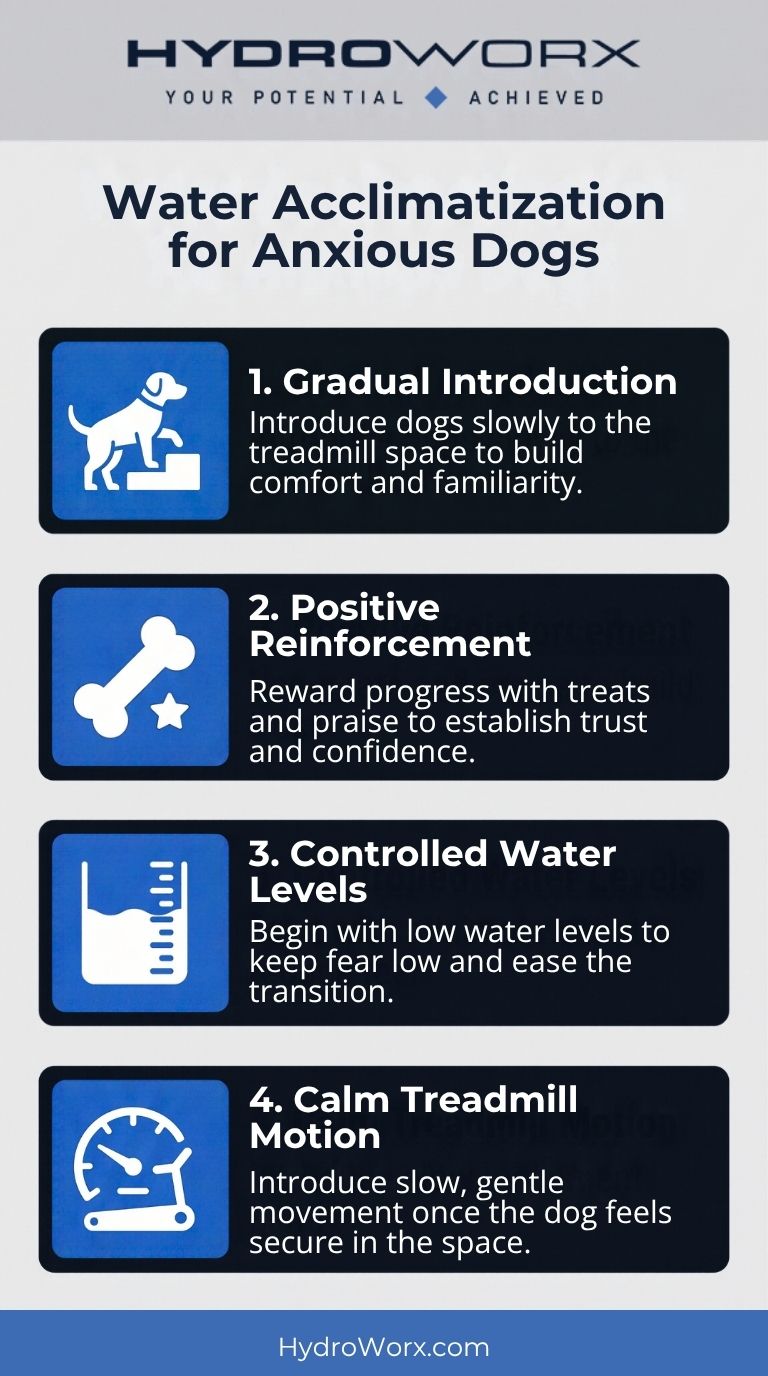
Successful water acclimatization relies on systematic desensitization and classical counter-conditioning—pairing potentially scary stimuli with positive high-value rewards (such as lick mats, peanut butter, or favorite treats) while keeping the dog below its emotional threshold. The HydroWorx K900 underwater treadmill is specifically engineered with features that allow clinicians to break the acclimatization process down into micro-steps.
Clinicians can structure a multi-phase onboarding process tailored to the temperament of each nervous patient:
- Phase 1: Dry Chamber Exploration: Before introducing water or movement, the dog enters the dry K900 chamber with both doors open. Allowing the dog to walk through, sniff, and eat high-value treats inside the open unit establishes a safe spatial association.
- Phase 2: Auditory and Tactile Habituation: With the doors securely closed, the clinician introduces mechanical sounds (such as low pump hums or quiet door seals) at low intensity while rewarding calm behavior, conditioning the dog to accept operational noises without alarm.
- Phase 3: Low-Level Water Fill from Below: Unlike overhead sprayers or deep pool drops which can startle animals, the HydroWorx K900 fills smoothly from the bottom up. Water is introduced slowly at warm temperatures (typically 84°F–88°F) up to the paw level first, letting the dog adjust to the sensation of wet feet.
- Phase 4: Low-Speed Belt Engagement: Once the dog is relaxed with water filled to the appropriate therapeutic level (e.g., hock or stifle level), the belt is started at a gentle, gradual speed (as low as 0.1 mph) to introduce motion seamlessly.
Environmental Control and Variable Management for Canine Comfort
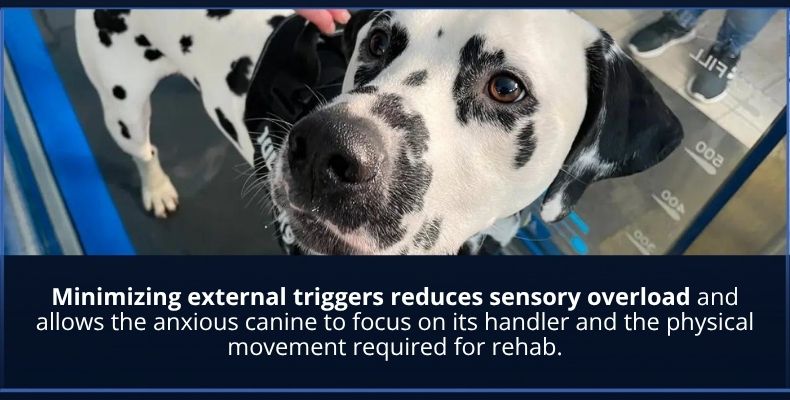
Controlling the clinical environment is just as crucial as controlling the aquatic equipment itself. Minimizing external triggers reduces sensory overload and allows the anxious canine to focus on its handler and the physical movement required for rehab.
Veterinary technicians and hydrotherapists can optimize the surrounding environment using evidence-based calming strategies:
- Patience and Variable Water Depth Control: Adjusting water depth to the ideal anatomical landmark helps the dog feel supported rather than unstable. Water filled to the level of the greater trochanter provides maximum buoyancy, reducing body weight support demands and easing joint pain that might be fueling anxiety.
- Non-Slip Traction and Stability: Insecurity often stems from slippery footing. Ensuring the treadmill belt surface provides excellent grip gives the dog physical confidence with every stride.
- Calming Auditory and Olfactory Audits: Reducing high-pitched clinical noises, using pheromone diffusers (such as Adaptil), and maintaining a calm, reassuring tone of voice lowers background sensory stimulation.
- Handler Positioning and Door Access: Operating with clear glass doors allows the owner or handler to stand directly at the dog’s eye level at the front of the unit, offering continuous verbal reassurance and target feeding.
Measuring Confidence Milestones for Long-Term Rehab Success
Desensitization is not a one-size-fits-all process; some dogs acclimate within ten minutes, while highly fearful or traumatized patients may require two or three dedicated orientation sessions before full aquatic treadmill running occurs. Tracking behavioral milestones alongside physical progress ensures that treatment always advances at the animal’s emotional pace.
As a dog moves from a state of apprehension to active engagement, clinicians observe clear physiological and behavioral shifts: a lowered, relaxed tail posture, steady and rhythmic breathing, willing acceptance of food rewards, and a smooth, symmetric gait pattern with full hip and knee extension. By prioritizing fear-free water acclimatization, veterinary practices build strong trust with both patient and owner, resulting in better compliance, faster physical recovery, and optimal therapeutic outcomes.

Elevate Your Veterinary Practice with HydroWorx K900
Providing exceptional canine rehabilitation requires technology that prioritizes both clinical efficacy and patient comfort. The HydroWorx K900 canine underwater treadmill is engineered with quiet operation, precise speed adjustments, smooth water filling systems, and 360-degree visibility to make water acclimatization seamless for anxious dogs. By integrating advanced canine hydrotherapy into your practice, you offer pets a gentle, low-impact pathway to pain relief, mobility, and renewed vitality. Contact HydroWorx today to explore how the K900 can transform your veterinary rehabilitation services.