
Returning to physical activity after childbirth is a delicate process that requires balancing the desire for movement with the critical need for anatomical healing. During pregnancy and delivery, the abdominal wall and pelvic floor undergo profound stretch, stress, and potential trauma. Returning to high-impact land exercises too quickly can compromise pelvic floor integrity, exacerbating conditions like diastasis recti, pelvic organ prolapse, and stress urinary incontinence. To bridge the gap between early-stage rest and high-impact physical conditioning, physical therapists and women’s health specialists are turning to aquatic therapy. Utilizing HydroWorx therapy pools and underwater treadmills allows new mothers and postpartum athletes to rebuild foundational core strength, restore gait mechanics, and recondition their cardiovascular systems in a buoyant, supportive environment that inherently protects the pelvic floor.
The Biomechanics of Aquatic De-Loading on the Pelvic Floor
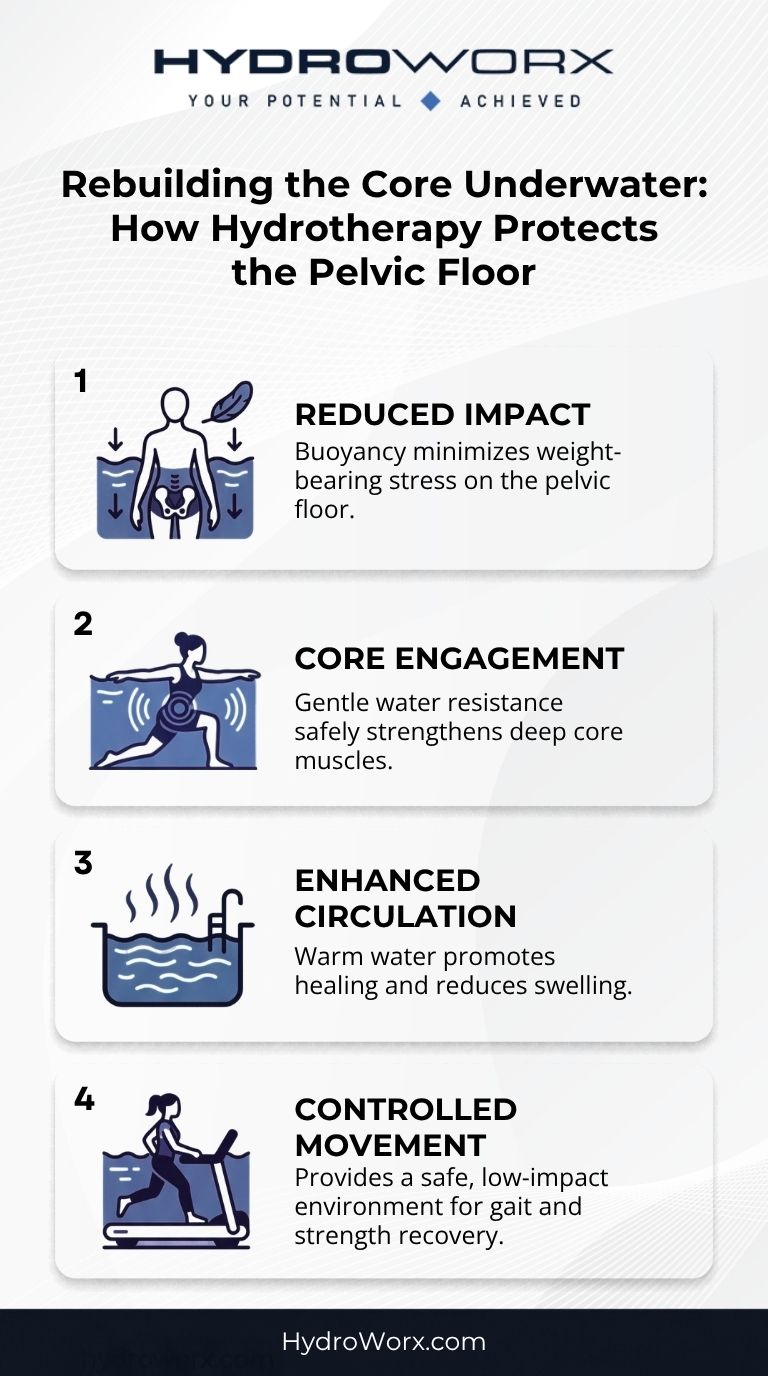
The primary challenge in postpartum physical rehabilitation is managing intra-abdominal pressure (IAP) against gravity. On land, activities as simple as walking, jogging, or carrying weight exert downward force onto a healing pelvic floor. Water’s natural property of buoyancy counteracts this gravity, fundamentally changing the biomechanical forces acting on the female body.
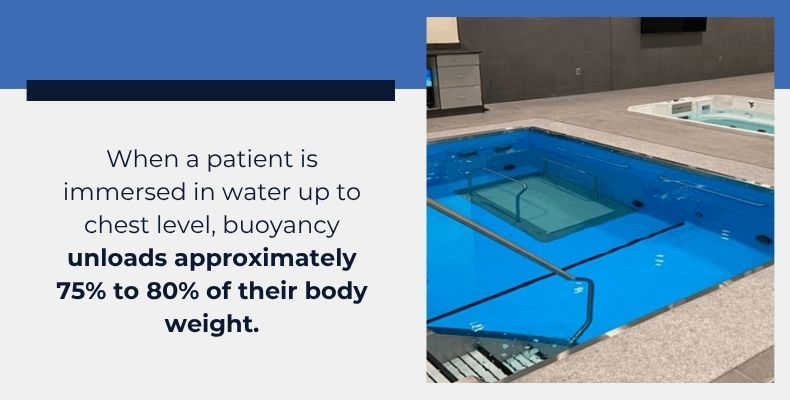
When a patient is immersed in water up to chest level, buoyancy unloads approximately 75% to 80% of their body weight. This significant reduction in downward gravitational pull offers immediate biomechanical advantages for postpartum recovery:
- Reduction of Downward Intra-Abdominal Pressure: Buoyancy minimizes the downward displacement of abdominal and pelvic organs during movement, allowing the pelvic floor muscles to engage gently without being overwhelmed by body weight.
- Hydrostatic Pressure Support: The uniform pressure exerted by water against the body acts as a natural supportive compression garment. This external support assists lymphatic drainage, reduces tissue swelling, and provides somatosensory feedback to the abdominal wall.
- Controlled Resistance Without Axially Loading the Spine: Water provides multidirectional resistance that scales automatically with speed. Patients can strengthen stabilizing muscles without placing heavy axial loads on the spine or pelvis.
- Elimination of Impact Peak Forces: Walking or light jogging on an underwater treadmill eliminates the harsh ground reaction forces (GRF) experienced on land, preventing jarring impacts to healing connective tissues and pelvic ligaments.
Targeted Aquatic Protocols for Postpartum Core and Gait Retraining
Re-educating the deep core—composed of the diaphragm, transversus abdominis, multifidus, and pelvic floor—requires precise, controlled movements. HydroWorx aquatic therapy pools provide specialized features like adjustable water depth, smooth-surface underwater treadmills, and targeted resistance jets that enable physical therapists to tailor exercise progressions to each patient’s specific stage of healing.
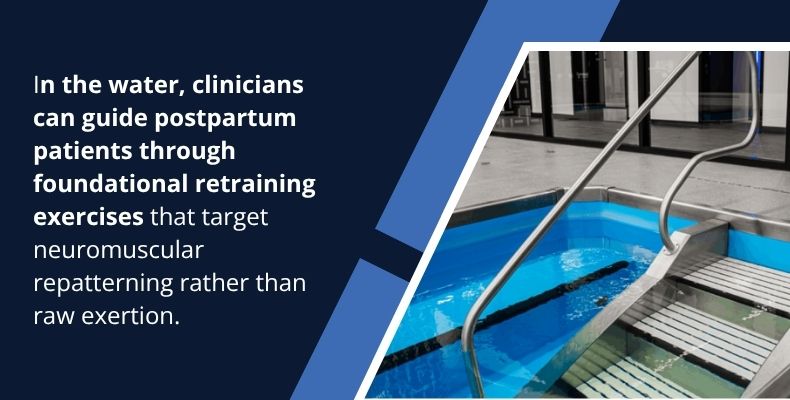
In the water, clinicians can guide postpartum patients through foundational retraining exercises that target neuromuscular repatterning rather than raw exertion:
- Underwater Treadmill Gait Retraining: Utilizing the integrated treadmill at lower speeds allows patients to practice a normal heel-to-toe gait cycle with proper pelvic alignment, eliminating the antalgic or guarded walking patterns often developed during late pregnancy.
- Deep Core Engagement with Water Resistance: Standing or gently moving against adjustable resistance jets challenges core stability in a dynamic environment, encouraging automatic co-contraction of the abdominal wall and pelvic floor.
- Buoyancy-Assisted Pelvic Tilts and Mobilization: The buoyancy of water allows for smooth, pain-free pelvic mobility work, relieving tightness in the lumbar spine and hip flexors while safely restoring anterior and posterior pelvic tilt control.
- Progressive Plyometric Prep: Before jumping or running on land, patients can perform shallow water bounding and light hopping to test pelvic floor continence responses and dynamic impact tolerance with minimal risk.
Safely Bridging the Gap from Clinical Rehab to Athletic Performance
For high-level athletes and active women, the post-birth timeline often brings frustration due to extended rest periods and restricted movement options. High-impact running, heavy weightlifting, and plyometrics on land are frequently off-limits for months following delivery. Hydrotherapy serves as a vital bridge, allowing postpartum athletes to maintain cardiovascular fitness and athletic conditioning long before their bodies are cleared for high-load land workouts.
By adjusting treadmill speeds, water depth, and jet resistance, clinicians can simulate intense cardiovascular workouts without exceeding the pelvic floor’s load tolerance. An athlete can perform high-intensity interval training (HIIT) on an underwater treadmill, maintaining peak VO2 max and muscular endurance while their connective tissues continue to remodel. This safe progression minimizes aerobic deconditioning, boosts psychological well-being, and ensures that when the athlete finally returns to full land-based training, their core and pelvic floor are structurally sound and prepared for impact.
Addressing Diastasis Recti and Pelvic Instability in the Pool
Diastasis recti abdominis (DRA)—the separation of the rectus abdominis muscles along the linea alba—is exceptionally common postpartum and directly impacts core stability. On land, improper intra-abdominal pressure management during exercises like sit-ups or planks can cause visible doming or coning along the midline, further stretching the weakened connective tissue.
The buoyant environment of a HydroWorx pool reduces the need for aggressive bracing patterns that spike intra-abdominal pressure. Instead, the aquatic medium supports the torso, allowing therapists to focus on gentle, deep-layer muscle recruitment. Patients can practice proper diaphragmatic breathing paired with pelvic floor lift without the constant fight against gravity. Furthermore, warm water immersion (typically maintained between 88°F and 92°F in therapy settings) increases collagen tissue elasticity, relaxes hypertonic surrounding musculature (such as tight hip rotators or lumbar extensors), and improves circulation to accelerate tissue healing across the abdominal wall.
Empowering Postpartum Recovery with HydroWorx
Rebuilding core strength after childbirth should never come at the expense of pelvic floor health. By harnessing the unique physical properties of water, HydroWorx aquatic therapy systems provide physical therapists and healthcare providers with a safe, versatile, and highly effective environment for postpartum rehabilitation. From early gait retraining to high-performance conditioning, hydrotherapy protects healing tissues while empowering women to move with confidence, strength, and freedom. Contact HydroWorx today to learn how integrating aquatic therapy into your clinical practice can transform your women’s health and postpartum recovery offerings.