
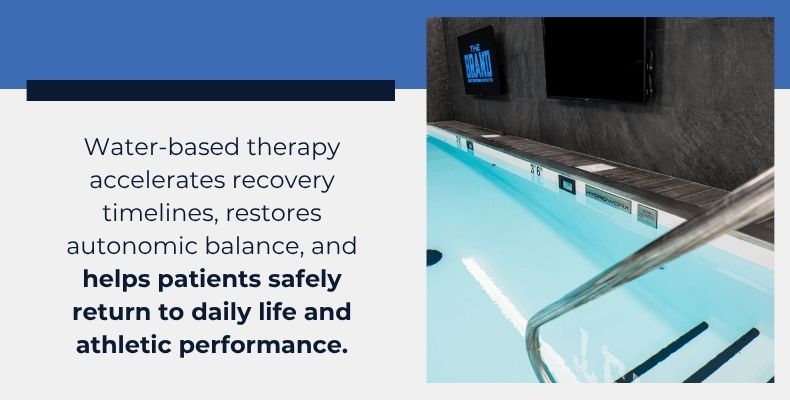
At HydroWorx, we understand that recovering from post-concussion syndrome presents a complex clinical challenge for patients and sports medicine professionals alike. Persistent post-concussive symptoms—ranging from chronic headaches and dizziness to vestibular dysfunction and autonomic nervous system dysregulation—frequently limit a patient’s ability to engage in standard land-based rehabilitation. When traditional exercise exacerbates symptoms, recovery stalls and physical deconditioning sets in. Aquatic therapy provides an innovative pathway to bridge this gap. By leveraging the unique physical properties of water, aquatic de-loading offers a safe, controlled environment where patients can begin early cardiovascular conditioning without triggering debilitating neurological symptoms. Through targeted sub-symptom aerobic thresholds, water-based therapy accelerates recovery timelines, restores autonomic balance, and helps patients safely return to daily life and athletic performance.
Understanding Autonomic Dysregulation and Sub-Symptom Thresholds
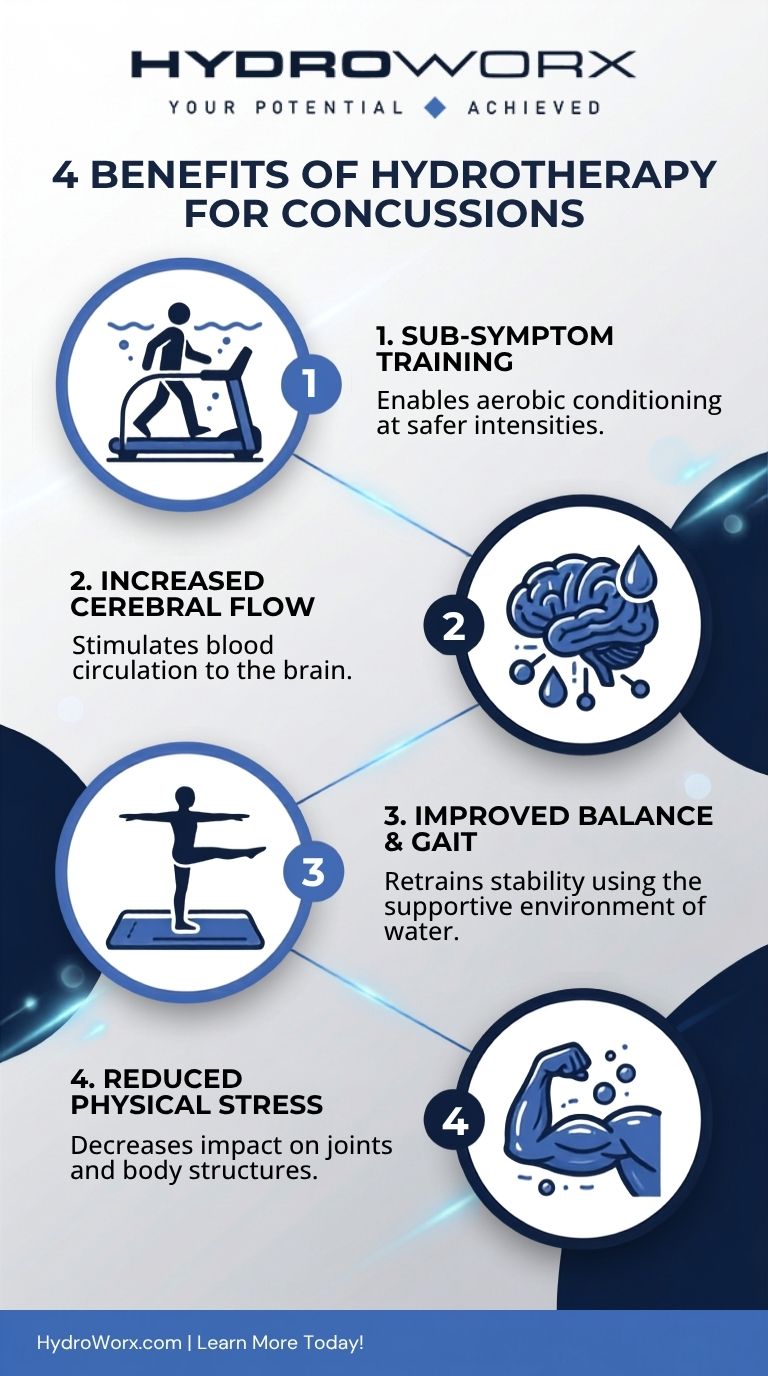
Post-concussion syndrome frequently disrupts the autonomic nervous system, impairing cerebral blood flow regulation and lowering the threshold at which exercise triggers symptoms. On land, even light exertion can elevate heart rates too quickly, provoking headaches, lightheadedness, and cognitive fatigue. Establishing a precise sub-symptom exercise threshold is essential for promoting neuroplasticity and cardiovascular recovery without triggering symptom flare-ups.
- Autonomic Balance: Controlled exercise helps recalibrate the sympathetic and parasympathetic nervous systems, restoring physiological resilience.
- Cerebral Blood Flow Normalization: Sub-threshold exertion promotes stable intracranial pressure and consistent brain perfusion.
- Psychological Confidence: Gradual physical progress reduces patient anxiety and fear of movement associated with symptom exacerbation.
Water immersion fundamentally alters the body’s hemodynamic response, allowing clinicians to utilize these physiological principles more effectively. The natural hydrostatic pressure exerted by water promotes venous return and increases central blood volume, effectively lowering resting heart rate and stabilizing blood pressure. Consequently, patients can achieve meaningful cardiovascular conditioning at target heart rate zones that would otherwise trigger severe post-concussive exertion symptoms during land-based activities.
Biomechanical De-loading and Vestibular Recalibration
Vestibular and oculomotor deficits are among the most persistent symptoms following a traumatic brain injury, making land-based balance and gait training exceptionally challenging. Buoyancy counteracts gravity, reducing impact forces on the spinal column, cervical spine, and joints while providing a supportive environment for balance retraining.
- Reduced Mechanical Stress: Immersing a patient to chest depth unloads up to 80% of their body weight, mitigating jarring impacts on the central nervous system.
- Enhanced Somatosensory Feedback: Multi-directional water resistance stimulates skin and muscle proprioceptors, aiding spatial awareness and stability.
- Safe Motion Exploration: Patients can practice balance, visual tracking, and head-turn exercises without the immediate fear or consequences of falling.
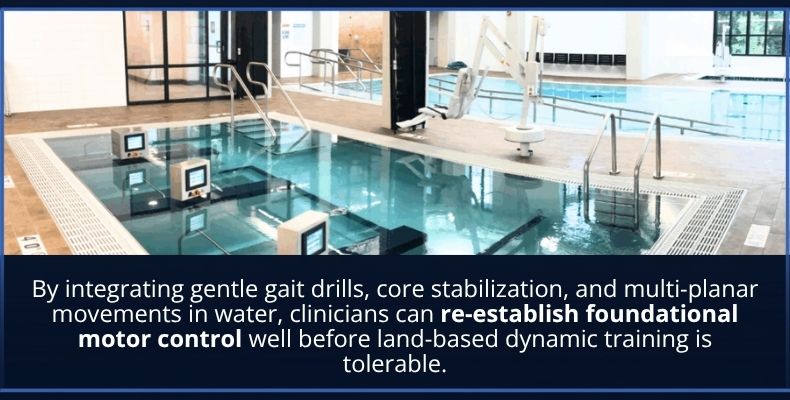
This hydrostatic support creates a powerful environment for gentle vestibular habituation. As patients move through water, fluid drag offers predictable support during head movements and dynamic maneuvers, allowing the vestibular system to recalibrate gradually. The reduction in gravitational strain on the cervical spine also alleviates tension-related cervicogenic headaches, which frequently mimic or exacerbate concussion symptoms. By integrating gentle gait drills, core stabilization, and multi-planar movements in water, clinicians can re-establish foundational motor control well before land-based dynamic training is tolerable.
Implementing Water-Based Protocols with Advanced Technology
To optimize outcomes, aquatic rehabilitation must go beyond passive water immersion and incorporate precise, measurable movement protocols tailored to patient tolerance. Modern aquatic therapy facilities utilize specialized equipment—such as integrated underwater treadmills, adjustable water depths, and variable resistance jets—to customize every aspect of the patient’s exercise prescription.
- Precise Speed Control: Underwater treadmills allow incremental speed adjustments starting as low as 0.2 mph to control heart rate response carefully.
- Targeted Dynamic Resistance: Variable fluid jets provide adjustable laminar flow for customized resistance during functional training.
- Visual Diagnostics: Integrated underwater cameras provide real-time video feedback, enabling clinicians to monitor gait mechanics and posture instantly.
Beginning with simple aquatic walking protocols, therapists can closely observe patient heart rates and physical presentation. As tolerance improves, protocols progressively integrate lateral shuffling, high-knee stepping, and light multi-tasking drills that challenge both cognitive and motor functions simultaneously. Variable resistance jets can be engaged to increase workload without increasing impact velocity, ensuring the patient remains strictly within their sub-symptom heart rate zone. Visual feedback from underwater cameras allows clinicians to identify subtle movement compensations and correct biomechanical dysfunctions immediately, establishing optimal movement patterns for a safer transition to land-based functional activities.
Transitioning from Aquatic Conditioning to Land-Based Performance
The ultimate goal of aquatic de-loading is to prepare the patient for a seamless, full return to daily function, work, and sport. Aquatic therapy serves as a dynamic stepping stone, building a robust physiological foundation that accelerates subsequent land-based physical therapy milestones.
- Stepwise Load Progression: Gradually increase weight-bearing demand by reducing water depth or transitioning from deep to shallow water drills.
- Dual-Task Integration: Combine aerobic exercise with cognitive challenges, such as counting backwards or reacting to visual cues, while in the water.
- Cross-Functional Tolerance: Build foundational endurance so that initial land-based sessions can focus on high-level skill re-acquisition rather than basic conditioning.
By systematically reducing aquatic support as autonomic stability improves, clinicians safely increase weight-bearing loads without overwhelming the central nervous system. The cardiovascular stamina and neuromuscular coordination gained during aquatic sessions directly transfer to land performance, minimizing the risk of symptom relapse during late-stage rehabilitation. Patients enter land-based protocols with restored cardiovascular fitness, superior movement efficiency, and greater psychological readiness, resulting in shorter overall recovery times and more reliable outcomes.

At HydroWorx, we design state-of-the-art aquatic therapy equipment featuring integrated underwater treadmills, adjustable floors, and high-performance resistance jets to empower clinicians in delivering precise, sub-symptom conditioning. Our advanced hydrotherapy systems allow physical therapists, athletic trainers, and medical professionals to create highly tailored recovery environments for complex conditions like post-concussion syndrome. Contact HydroWorx today to explore our innovative aquatic solutions and schedule a personalized demonstration for your facility.