
Cerebral palsy (CP) remains the most common motor disability in childhood, presenting complex neurological and musculoskeletal challenges that require early, continuous, and highly targeted physical intervention. For pediatric physical therapists, managing the secondary effects of CP—such as severe muscle spasticity, joint contractures, impaired postural balance, and altered gait mechanics—can be a daunting task during traditional land-based sessions. Gravity often acts as a constant adversary, amplifying muscular tightness, aggravating abnormal motor reflexes, and increasing the fear of falling during weight-bearing activities. Integrating aquatic therapy into comprehensive pediatric rehabilitation programs offers clinicians a transformative medium to address these movement barriers safely and effectively.
At HydroWorx, we design state-of-the-art aquatic therapy equipment that harnesses the unique physical properties of warm water, empowering pediatric therapists to help children with cerebral palsy expand their functional independence, refine gross motor skills, and achieve critical developmental milestones.
Understanding Muscle Spasticity and Movement Limitations in CP
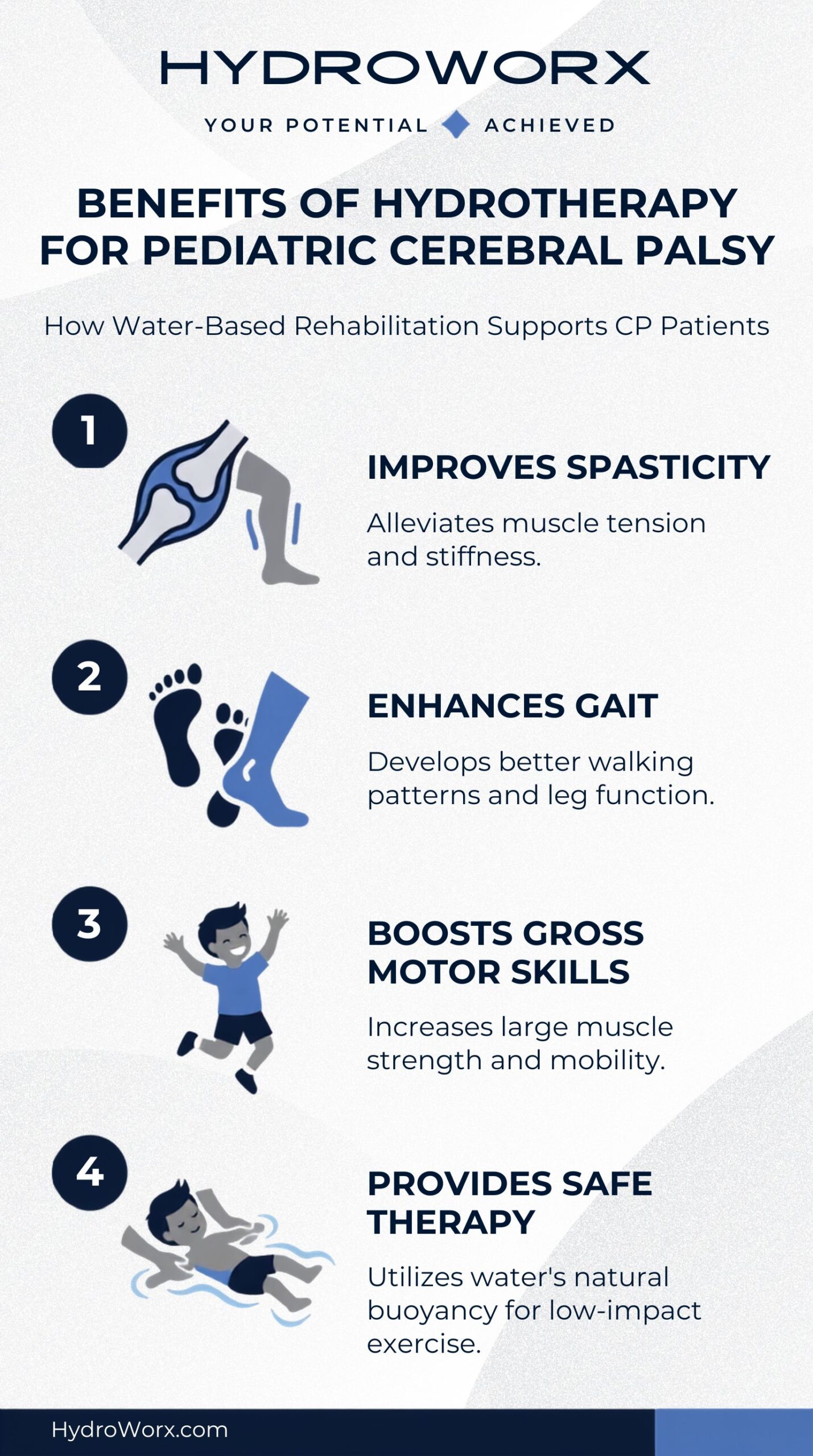
Cerebral palsy encompasses a diverse group of permanent disorders that affect the development of movement and posture, stemming from non-progressive disturbances in the developing fetal or infant brain. The most prevalent form, spastic cerebral palsy, is characterized by hypertonia—an abnormal increase in muscle tone that causes persistent joint stiffness, awkward movement patterns, and severely reduced functional mobility.
In a traditional clinical setting, hypertonic muscle groups actively resist passive and active movement. When children attempt to walk, run, or stand independently, hypertonicity in the hamstrings, hip adductors, and gastrocnemius muscles often leads to classic scissoring gait patterns, persistent toe-walking, and excessive metabolic energy expenditure. Furthermore, the continuous struggle against gravitational forces can induce physical fatigue, joint pain, and emotional frustration for the young patient. To break this debilitating cycle, clinicians require a therapeutic environment that temporarily alters body biomechanics, relaxes hypertonic muscle groups, and drastically reduces the gravitational load on developing, vulnerable joints.
Thermal Benefits: Warm Water Hydrotherapy for Muscle Tone Reduction
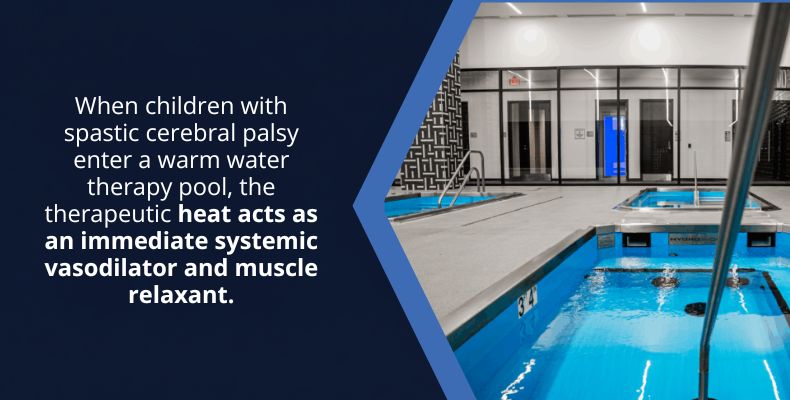
Water temperature plays a vital physiological role in pediatric neurological rehabilitation. When children with spastic cerebral palsy enter a warm water therapy pool—typically maintained between 88°F and 92°F—the therapeutic heat acts as an immediate systemic vasodilator and muscle relaxant.
Warm water immersion produces several key physiological responses that directly combat involuntary spasticity:
- Reduction of Muscle Gamma Nerve Activity: The heated thermal environment dampens muscle spindle firing rates, effectively decreasing resting muscle tone, easing muscle guarding, and relieving painful spasms.
- Decreased Joint Stiffness: Elevated tissue temperatures significantly improve soft tissue elasticity and muscle collagen extensibility, allowing therapists to perform gentle passive stretching and joint mobilization with far less resistance and discomfort for the child.
- Hydrostatic Proprioceptive Input: Uniform hydrostatic pressure surrounding the submerged body stimulates deep tactile and cutaneous proprioceptors. This continuous sensory input enhances spatial awareness, body alignment, and postural stability while soothing an overstimulated nervous system.
By effectively lowering muscle tone through thermal relaxation, warm water hydrotherapy creates a valuable window of clinical opportunity. Within this state, pediatric patients can execute voluntary movements and motor control exercises that are nearly impossible for them to perform on land.
Using Underwater Treadmills and Resistance Jets to Target Gait Symmetries
Once muscle hypertonicity is managed, clinicians can smoothly transition from passive stretching to active gait retraining and functional gross motor strengthening. HydroWorx underwater treadmill systems featuring integrated directional water jets offer pediatric physical therapists a highly controlled, adaptable setting to retrain gait mechanics and core stability.
By adjusting the water depth, clinicians can unweight a child by up to 75% of their body weight. Buoyancy effectively counteracts gravity, relieving stress on weight-bearing joints while eliminating the compensatory, rigid posturing frequently observed on land. On the smooth, continuous belt of an underwater treadmill, children can practice a natural heel-to-toe stride pattern, lengthen their step cadence, and improve bilateral limb symmetry without the lingering fear of falling.
Simultaneously, adjustable water resistance jets can be precisely positioned to target specific muscle weakness patterns. Therapists can utilize mild jet currents to challenge trunk balance, encourage upright spinal alignment, or provide progressive resistance during forward stepping, side-stepping, and backwards walking. Integrated underwater camera systems provide real-time diagnostic visual feedback, allowing clinicians to analyze foot placement, hip alignment, and knee extension instantly, providing immediate verbal cueing or hands-on manual corrections as the child moves.
Psychological and Fun Factors: Boosting Pediatric Engagement & Compliance
One of the greatest clinical hurdles in pediatric physical therapy is maintaining long-term patient engagement and exercise compliance. Traditional repetition-heavy rehabilitation drills can quickly feel like burdensome work to a young child, leading to anxiety, crying, or emotional disengagement.
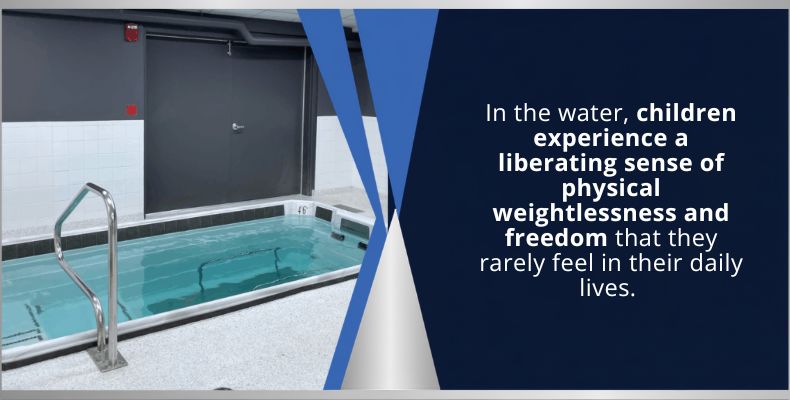
The aquatic environment inherently transforms challenging therapy into an inviting, play-based experience. In the water, children experience a liberating sense of physical weightlessness and freedom that they rarely feel in their daily lives. They can jump, splash, balance, and step forward independently without relying on heavy orthotic braces, walker frames, or constant physical holding from a therapist.
This profound sense of movement autonomy boosts self-confidence, self-efficacy, and intrinsic motivation. When therapy feels like fun, children are far more willing to complete higher repetition volumes, push past physical discomfort, and stay actively focused throughout the session. The positive emotional associations formed in the pool directly translate into higher treatment adherence, faster skill acquisition, and superior overall clinical outcomes.

Practice Takeaways for Pediatric Physical Therapy Outpatient Centers
For pediatric hospitals, specialized outpatient rehabilitation clinics, and school-based therapy facilities, investing in advanced hydrotherapy technology significantly elevates the quality and scope of care provided to children with neurological movement disorders. Aquatic therapy does not replace traditional land-based physical therapy; rather, it acts as an essential catalyst that accelerates physical progress. The muscular strength, joint range of motion, trunk stability, and gait confidence gained underwater directly transfer to improved functional mobility, transfers, and walking ability on land. At HydroWorx, we are proud to partner with pediatric clinicians worldwide, providing the innovative therapy pools, underwater treadmills, and specialized technology needed to help children with cerebral palsy unlock their full physical potential, overcome movement barriers, and live richer, more independent lives. To learn more, contact our team today.